Getting nostalgic about someone else's memories
I remember the first time I held a camera in my hands. Before my dad could finish reading off the manual, I went rogue and started click, click, clicking away at it.
I took some impeccable Dutch Angle shots of my family and the house we lived in. Of course, I was pretty young back then, so I didn’t know what ‘Dutch’ meant. Or ‘Angle’ for that matter. Let alone the new meaning they would assume when put next to each other.
And my family didn’t know they were looking at a future filmmaker with a penchant for the artsy fartsy.


Left: my first ‘solo’ picture, captured by our first digital camera. Not sure how old I was here, but clearly I was young enough to be seen wearing a duck costume in broad daylight.
Right: now that I am much older, I have graduated to frog hats like any self-respecting adult would have done.
This bad boy was an Olympus C-220.
It came with a sensitive 2.1 megapixel lens, had a generous storage space of 8 megabytes, and offered great overall performance.
At least that’s what it said on the box.
It took me a while to realize that this thing sucked. In fact, this entire era of digital cameras was a fad, and they were no match for the film cameras that preceded them, or the DSLRs that would follow.
I cracked the case when I was going through old photo albums on a random Sunday. How else could you possibly explain a photo of me from 2011 looking so much worse than those of my dad from the seventies? Thus I concluded: we are a family of terrible photographers.
Despite years of (badly-photographed) photographic evidence, it was hard for us to pin all the blame on the camera that captured them.
Because how could we? When the people who took those photos were standing right there? Extremely blurry and out of focus in almost every picture.
Maybe we were the problem.
Say what you will about the Meiyappans, but whatever we lacked in framing, lighting, composition, perspective, attention to detail, or simply “just an eye for visuals”, we made up for with sheer perseverance. From 2003 to 2013, there was not one weekend when my father didn’t take out the camera from the camera shelf and click some truly terrible pictures.
Once, he accidentally invented the selfie while trying to clean the viewfinder with a bit of spittle and a handkerchief. The rest of my family, myself included, lacked the foresight to appreciate this futuristic invention.
I, too, am not very gifted in this department, as I came to learn. In my time, I’ve obscured many a scenic background with my family’s faces, and ruined many a family portrait with a fat finger on the lens.
My sister and mother weren’t much better, but at least they had the excuse of not getting enough practice. My dad and I would hog the camera all the time, perhaps in a competition to see who’d make the worse photographer. I am happy to report that we kept outdoing each other until we finally retired the damn thing.
Surely there’s something to be said here about our own talent, or the lack of it. I’m all for accountability, after all. But I can’t help but blame some of this on the user manual that Olympus included in the box. They called this a “point and shoot” camera, and that was their fault. Because, you see, that’s all we ever did. Exactly as told.
We pointed. Then we shot. Then, without ever stopping to look at our photos – our crimes against humanity – we pointed and shot again.
Maybe we’d have had better luck if the instruction manual had called it
- Point
- Move your subject around
- Make sure there’s some kind of light source
- Set the frame to get a good mix of your subject and the background
- Make sure the memory card is free, and more importantly, inside the camera
- Fiddle about the settings while your subject zones out
- Give up and put the camera on ‘AUTO’ mode
- Remind your subject to smile
- Then shoot
It might sound like I am complaining. But I am not. In fact, this is what I’m nostalgic about. These days, with smartphones, anyone can take a decent enough picture. The photos from our Olympus era might not be much to write home about, but we made a lot of memories because on every occasion we had something bringing us together. A common enemy: the camera.
I've always wondered why people my age or younger yearn for film cameras to make a comeback. Even if film cameras are clearly superior (they are), that is not your nostalgia to nostalge about! If you’re getting nostalgic about something you’ve never experienced yourself, you might be highly susceptible to marketing propaganda. On an unrelated note, I’ve got a snake oil bridge to sell you.
Maybe what we really miss is how hard these things used to be. After a dozen failed attempts, when you click a somewhat good photo, there’s a sense of accomplishment. Now that it’s too easy to make a good shot, it just doesn’t seem enjoyable anymore.
A big part of our digital camera and film camera shenanigans had to do with Constraints.
Lighting constraints that didn’t let you take photos at night. Storage space and battery constraints that were essentially time constraints in Technical Jargon clothing. The lag! Will somebody tell these kids about the lag!? The fact that cameras looked like cameras — you couldn’t just bloody sneak them in anywhere, like we do with our phones now. If you had to sneak it in somewhere, you had to have a plan.
Because I couldn’t deal with the nostalgia anymore, I recreated a problem that had been largely solved for more than a decade.
(We don’t want Google establishing another monopoly with enshittification, do we? That’s why I stepped up and decided to make photography worse.)
How does one struggle to click a decent picture when our phones have gotten so, so capable? Well, the first step is hope. A willingness, if you will. Because where there’s a will, there’s a way to fuck things up. There always is.
There’s got to be some way to make clicking pictures on your phone more cumbersome.
After many weeks of struggling to struggle, I found the way. Follow these steps to make clicking pictures on your phone at least 10x harder, and therefore, at least 10x more enjoyable:
- Use the QR code scanner on your payment app as a viewfinder
- Set up your frame to include a payment code in its view
- Screenshot it before it’s gone to the next screen
If you’re not quick enough to capture that screenshot, your viewfinder (the payment scanner) will make way for the final screen where you need to enter your amount or PIN. It literally costs you money if your shot is a dud.
It’s the closest thing you can do to getting yourself a film camera, besides getting yourself a film camera.
You could, of course, try to find a way around this. You may screenshot and miss multiple times in a row, then start over each time. But you risk pissing off the shopkeeper and the line behind you which keeps growing.
Here are a few pictures I captured this way. Click to enlarge.
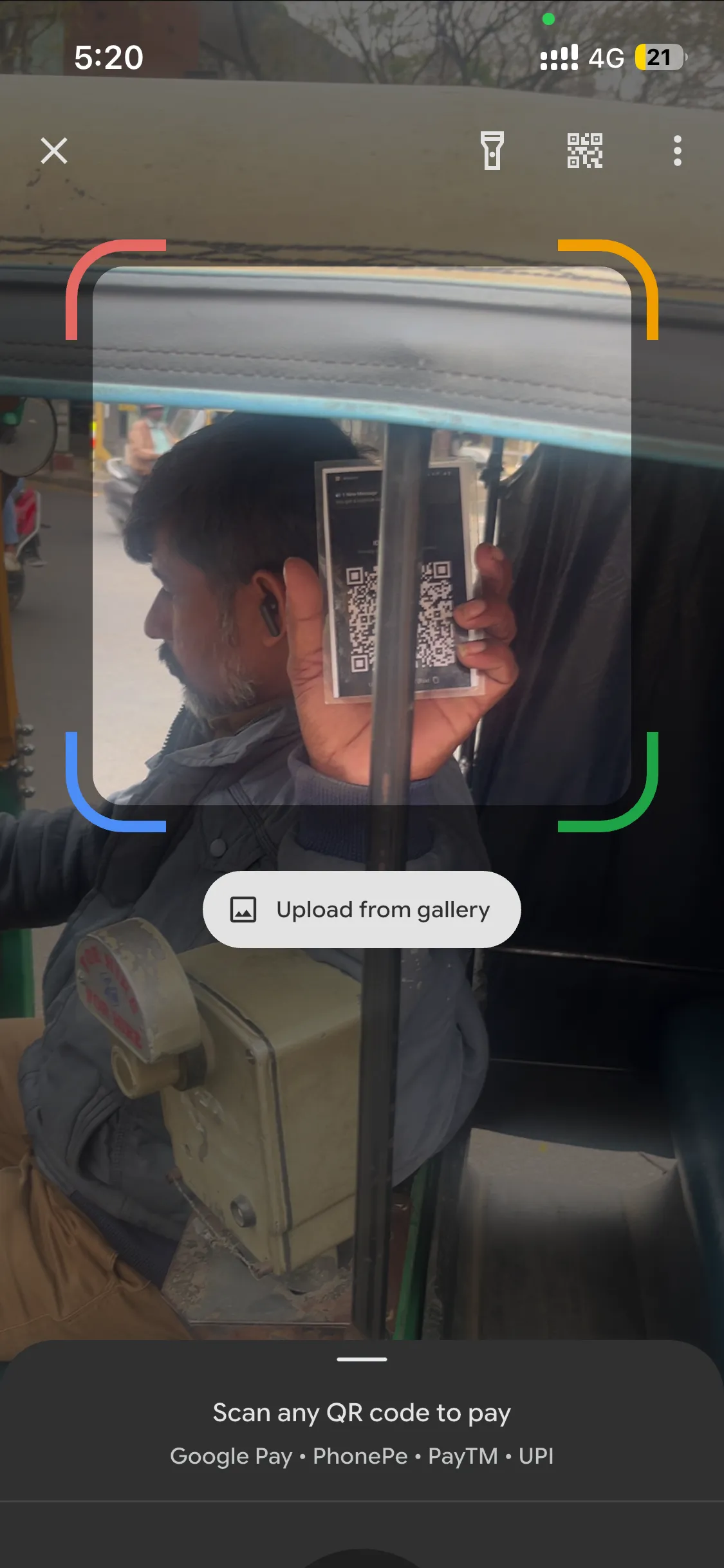

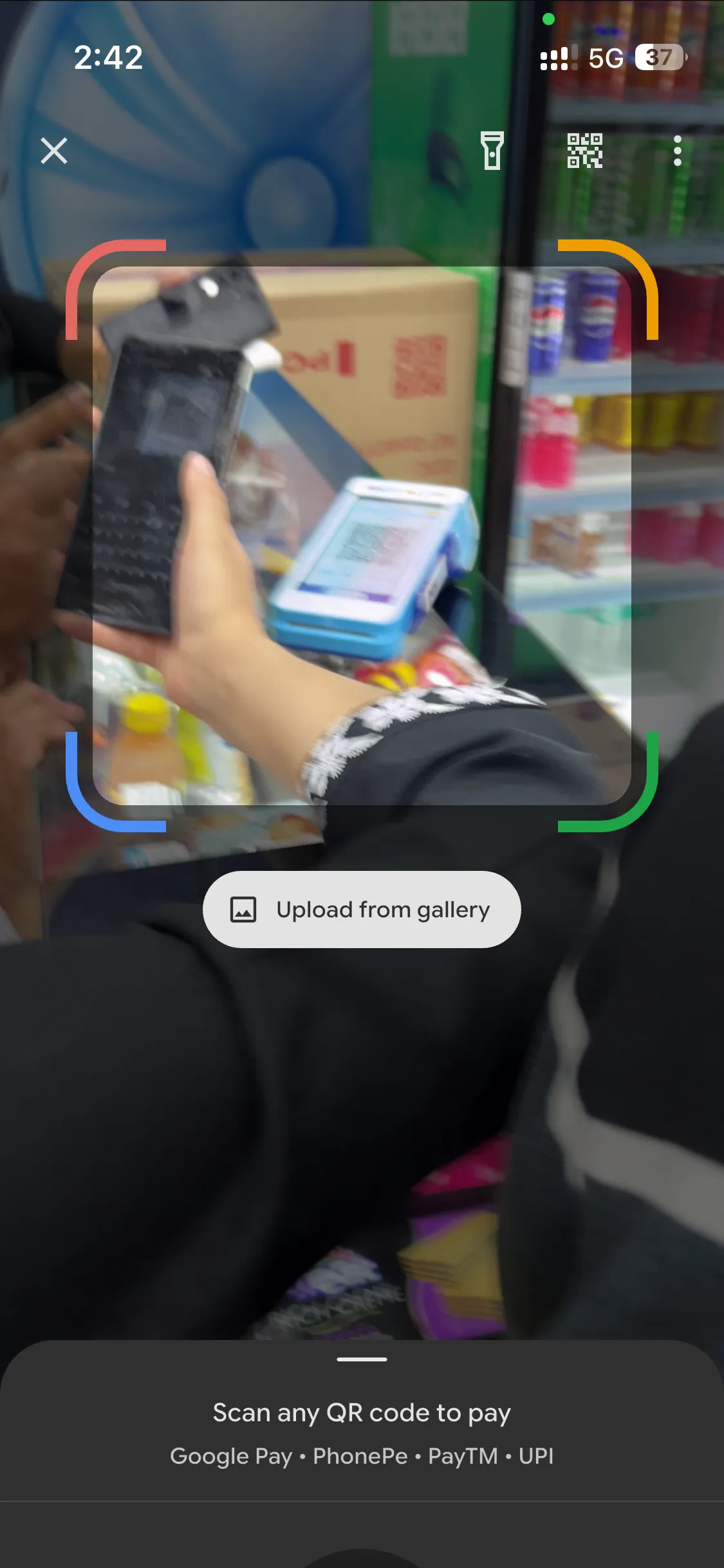
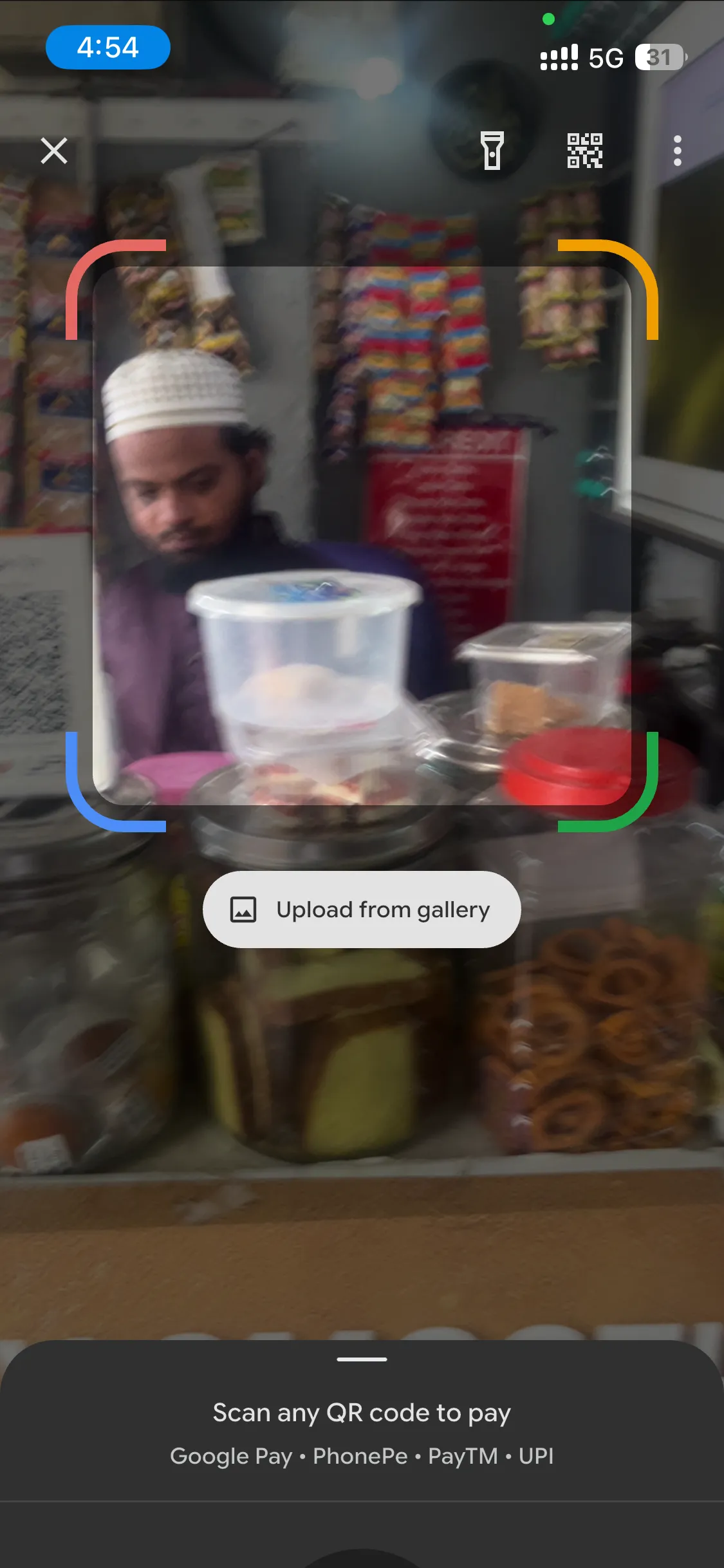
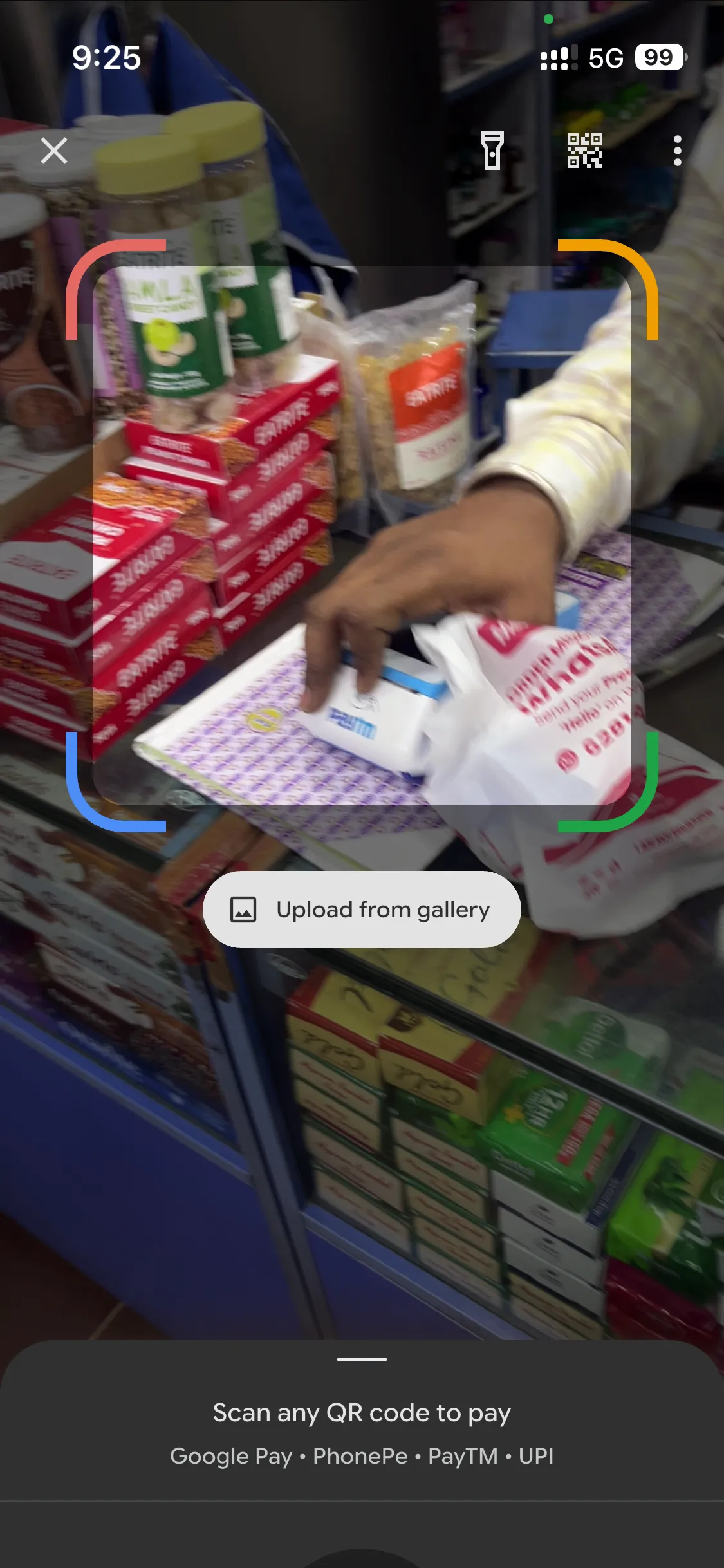
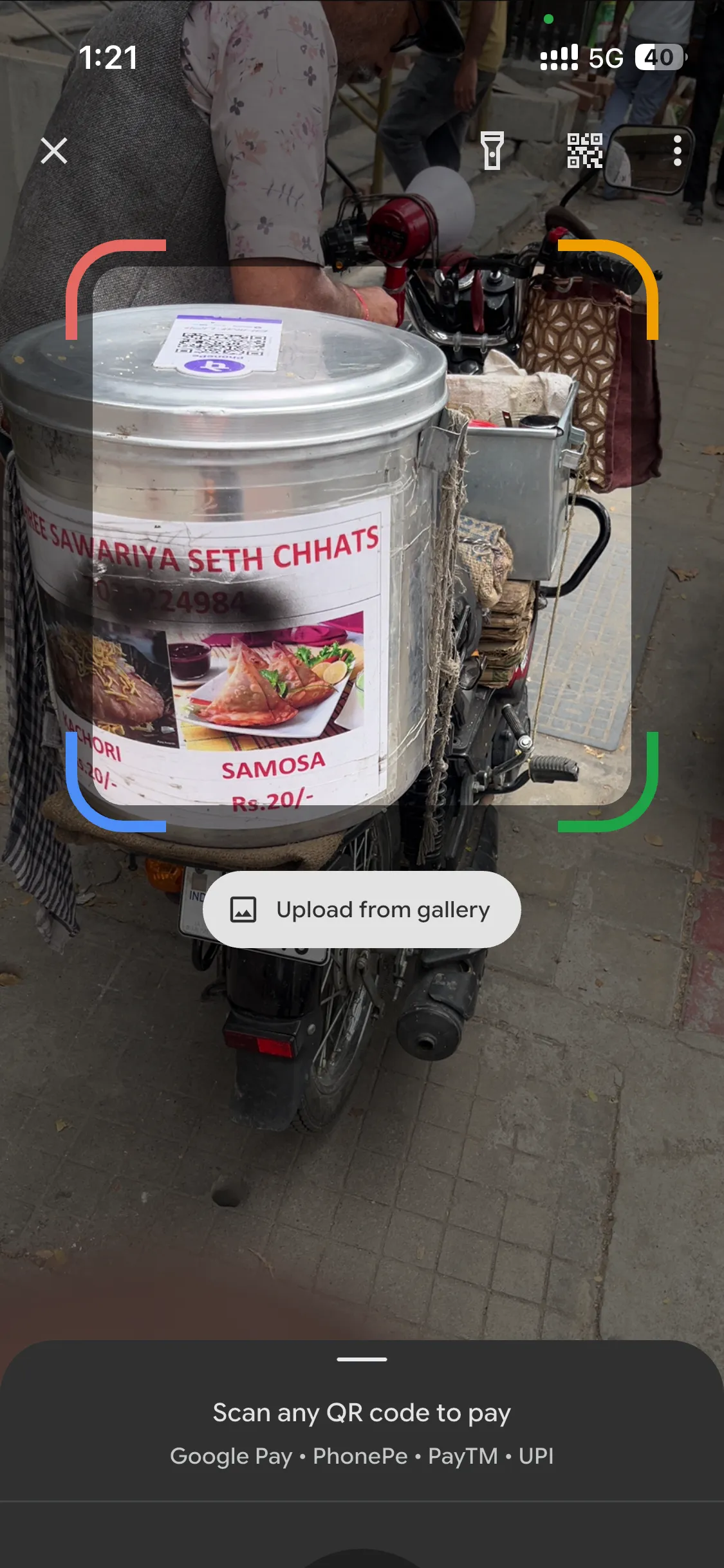
The struggles, as always, were absolutely worth it.
Aww, would you look at that!
You made it to the end of this page. And for that, you deserve a cookie.
A browser cookie!
I joke, of course. I neither have the money nor inclination to advertise my work so blatantly. That said, if you enjoy my writing, please consider:
b. Buying me a coffee.
c. Emailing me.
d. Contacting me through other means.