How (not) to plan for your 2027 sales kickoff
Ah, look what we have here. Quite the rare species.
A revenue leader who wants to bring their whole team together, get them on the same page, and incentivize them to do their life’s best work. My team at GroundSwell Group plans and produces 300 events annually, and a third of these look eerily similar to the Sales Kickoff you’re envisioning for the upcoming year.
Naturally, we know a thing or two about what makes a great SKO. And a terrible one, too!
We combined our expertise with perspectives from revenue leaders, leading sales coaches, and sellers on the ground to help you plan a truly effective SKO for your company in 2027.
Now, the obvious, you can certainly bring in a partner like us to source great venues at impeccable destinations, plan exciting team-building activities, figure out travel + stay logistics, and turn this into an unforgettable experience. But unfortunately, that’s not all it takes. No, sir. No, ma’am. Because your mandate is not just to ensure everyone “has a great time” at the SKO. You also need it to be effective: in terms of morale, camaraderie, learning, and to retain your top performers. Did I mention alignment with strategy, solution, and territories?
But you already knew ALL of that, didn’t you?
So instead of telling you what to do, we thought it’s more helpful to highlight what not to do. The patterns we all fall into - almost subconsciously - when we’re deep in ‘SKO planning’ mode.
Bad Pattern #1: Planning too late
If your company has run sales kickoffs in the past, you already know when your next SKO will fall in the next year. Some even know where it’s going to be. For many companies in the US, it’s Las Vegas. One can only hope that what happens in Vegas doesn’t stay in Vegas!
But maybe you want to shake things up a bit, maybe a different destination this year. Either way, Matthew Carr, the Chief Revenue Officer at Multiplier, says “You need internal alignment on the dates and the budget for it locked at least 6 months before your actual SKO. And you need to jump into action at least three to four months before the kickoff.”
Planning closer to the event doesn’t mean you can’t pull off something incredible. It just gets a lot harder, expensive, and creates unnecessary hassle that you could have easily avoided.
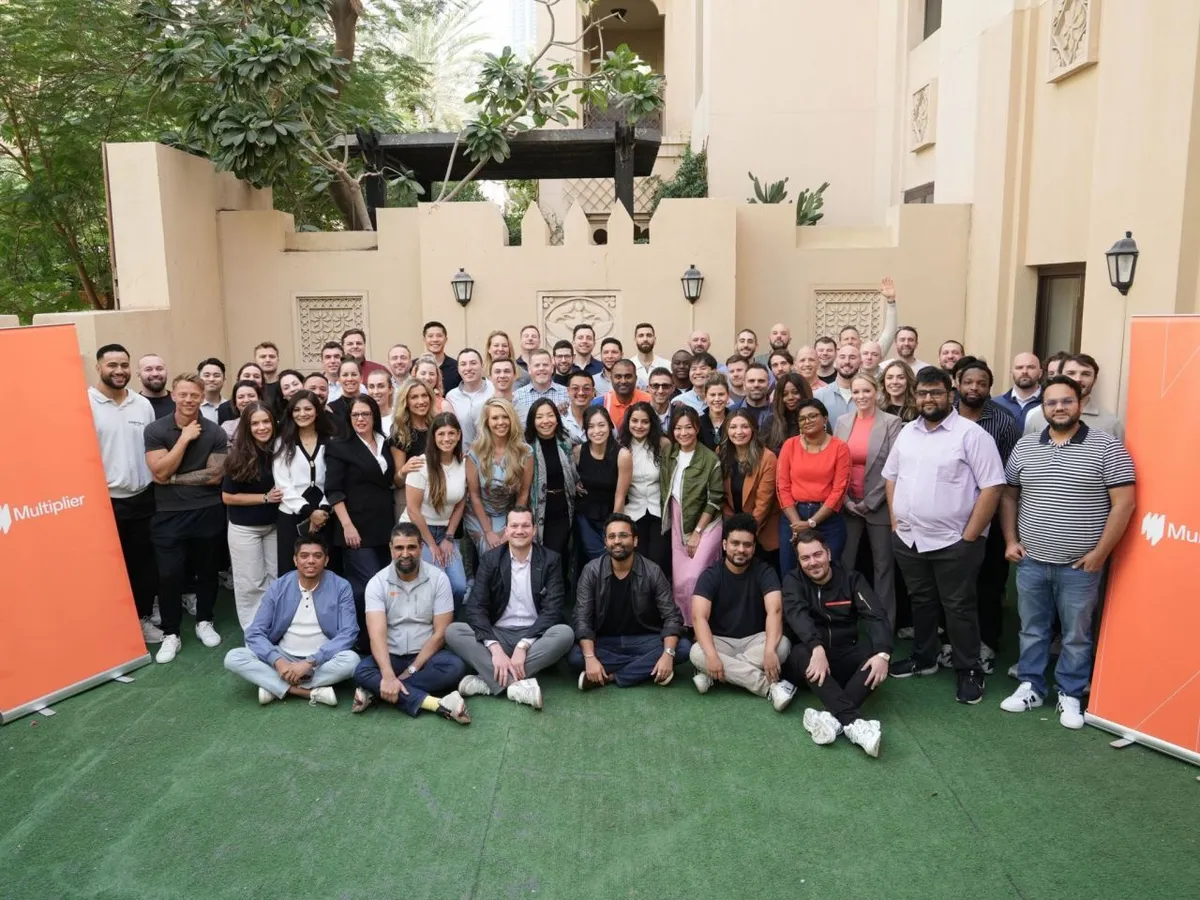
Highlights from the 2026 SKO we produced for Matt's team at Multiplier
Bad Pattern #2: Not thinking about Seller EPH and YPH
Eyerolls Per Hour (EPH) and Yawns Per Hour (YPH) are terms I just made up to tell you just how disengaged your sellers can be at a badly planned SKO. Now, I’m not asking you to actually measure these things, but rather think about how your team will respond to every part of your agenda. Is this keynote actually helpful to them? If it’s an external speaker, is their experience relevant? Differentiated? Specific to your team? Is it easy enough for your team to apply all the knowledge that’s being imparted?
Cara Pacific Campbell, a keynote speaker from Idaho, reflects on her experience from many years back when she was on the other side of the stage during her sales kickoffs. “Whenever we had external speakers who were high up at Microsoft or Amazon, they’d come in and tell us all about their own success. How exciting it is that we have the opportunity to sell their cloud services... we were like “Okay, and?” We just didn’t respond to it the way they expected us to.”
To avoid that kind of unenthusiastic response, Cara recommends getting into your team’s shoes and thinking about what they're looking for, much before you book that keynote speaker or build out your agenda. Matthew adds that “You need to go out of your way to make sure your SKOs don't feel monotonous or predictable. Mix it up every single year.” Keep them fresh, and you’ll pretty much bring those YPH and EPH numbers down to zero. No need to measure them.
Bad Pattern #3: Not realizing how much your 2027 Sales Kickoff can influence your 2027 Sales
When we asked our expert panel about the most common pitfall in planning sales kickoffs, the Multiplier CRO reveals that “one of the things people often forget is it’s not just about the days when the Sales Kickoff actually goes down. It’s about how the learnings show up 3 months in, 6 months in after the event. It’s about how we keep that momentum alive.”
There are measures you can put in place, having your sales enablement team take ownership of the content documentation and reinforcement every quarter, if not every month.
When asked about the most memorable SKO he’s been a part of, Matthew Carr rattles off with two answers that seem obvious to him. The first one, was the sales kickoff kickoff he envisioned and executed in Dubai in 2026, bringing together sellers from every territory where Multiplier is active. He highlighted the fact that he could completely own the agenda and the content and focus on upskilling and recognizing his team, while knowing the experiential parts of it were taken care of. [Disclaimer: GroundSwell Group planned and produced this SKO for Multiplier.]
And another one, when Matthew was a mid-senior sales leader at Paycor, where the HCM solutions provider bought the naming rights to a stadium in Cincinatti, Ohio and conducted their sales kickoff centered around that very stadium.
Bad Pattern #4: Focusing too much (or too little) on your top performers
Emily Smith (name changed) is a senior account executive at a Fortune 50 company who made president’s club for 4 years in a row, shared her honest take about her company’s sales kickoffs: “Too often, our SKO is focused on bringing B-players up to the level of A-players. I understand training and motivation is important, but when 90% of the agenda is focused on them, it just feels like a waste of time for the rest of us. It also feels like the leaders are not as interested in helping their top performers operate at an even higher level. The RnR is not enough, and there’s nothing new in terms of experience either. It’s the same hotel in Las Vegas every year. I also don’t have a formal channel to have this opinion heard, so I’m ranting to y’all instead.”
Robert Triggs, who made President’s Club at Xerox for several years, currently helps Microsoft partners improve their sales performance and talks about the flip side. “While it’s key to enable your top performers, you also need to motivate your “unwilling and able” employees and give the right tools for your “willing and unable” employees to succeed.”
Matthew Carr recommends breakout rooms to navigate this, so the SKO is equally useful to everyone in attendance. What’s applicable to one kind of seller, might not be relevant to another. Design the SKO with this in mind, and its response and effectiveness will skyrocket.
Bad Pattern #5: Not leveraging your team enough
It’s true that a sales kickoff is ultimately the sales leader’s show. But that doesn’t mean other teams in your company only get pulled in at the last minute. Depending on your size, complexity, and org-structure, you typically have your field marketing team or your people operations team to handle the logistics, and an event planner to plan and execute.
You also need to start engaging your sales enablement team early to research your team’s needs and design an agenda that truly uplifts every seller to deliver on their true potential.
If you have your eyes set on a sales kickoff within the next 4 to 5 months, now is a great time to connect your team to an event planner who knows how to pull these off in style.
You can write to me if you’d like to introduce me to your team or connect with me on LinkedIn to share your thoughts.
Aww, would you look at that!
You made it to the end of this page. And for that, you deserve a cookie.
A browser cookie!
I joke, of course. I neither have the $$$ nor inclination to advertise my work so blatantly. That said, if you enjoy my writing, please consider:
b. Buying me a coffee.
c. Emailing me.
d. Contacting me through other means.